Materials
Double gauze: the fabric that looks like nothing and sleeps like a cloud
26 June 2026 · 4 min read
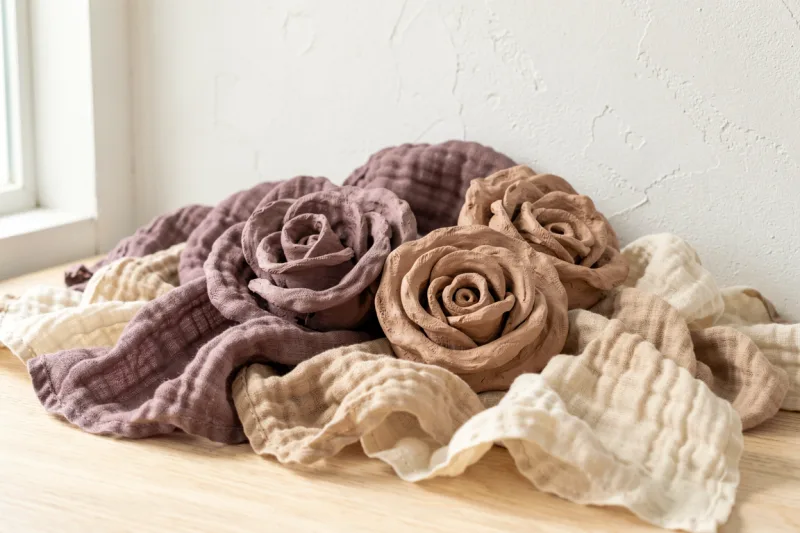
Two thin layers tacked together at intervals. It looks impossibly light, weighs almost nothing, and is warmer than it has any right to be.
Double gauze started in Japan as fabric for baby clothes, on the grounds that anything against a newborn's skin should be as light and breathable as possible. It has been moving into bedding for about a decade, and it deserves the attention.
How it is made
Two layers of very loosely woven cotton gauze, stitched together at regular intervals with tiny tacking points — usually every centimetre or so, invisible unless you look. The layers can move slightly against each other, which is where the puckered, crinkled surface comes from.
That air gap between the layers is the whole trick.
What it feels like
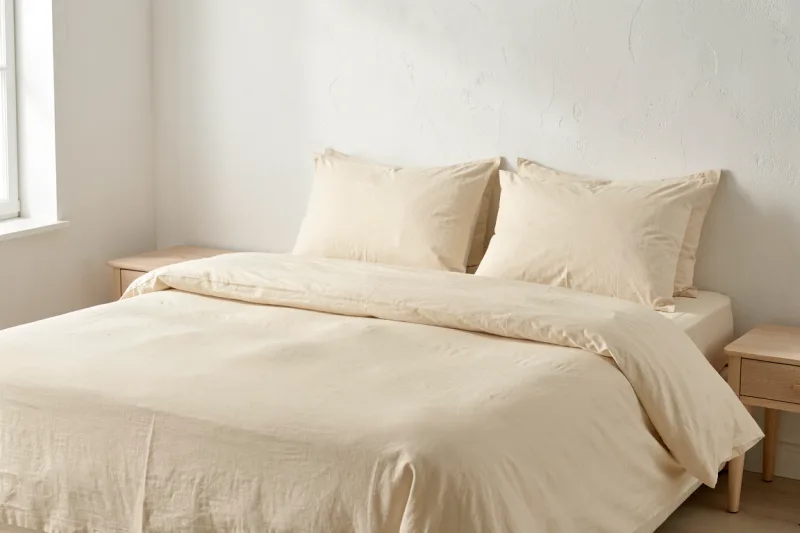
Weightless. A king-size double gauze duvet cover weighs less than half a comparable sateen one. It does not drape so much as billow.
The surface is soft and slightly textured, like a well-washed muslin, and it gets softer with every wash for the first year or so.
Warm and cool at once
This is the confusing part. Double gauze is extremely breathable — the weave is open enough to see light through — yet the trapped air layer insulates.
In practice it works across a wider range of room temperatures than any other cotton we sell. Good in a warm bedroom in July, still comfortable in an unheated one in October.
The honest drawbacks
- It is not durable in the way percale is. The open weave snags on rings, watches and rough toenails. It will not last fifteen years.
- It shrinks. Around 5% on the first wash — good sellers pre-wash it, but check.
- It never looks crisp. The crinkle is permanent and ironing it out defeats the point.
- It is not opaque. On a white duvet, a dark insert shows faintly through.
Who it is for
People who find ordinary bedding heavy. People in bedrooms that swing between warm and cold. People who like a soft, unstructured, slightly rumpled bed — if you already prefer linen for its texture, gauze is the lighter cousin.
Not for you if you want a sharp, flat, hotel-made bed, or if you need bedding to survive a decade of hard use.
Washing it
30–40 °C, mild detergent, no softener, low tumble dry. Take it out damp and hang it — it dries in about an hour because there is so little of it. Do not iron: the crinkle is the fabric.